+1-800-742-8900 | [email protected]
Mon - Fri: 7:00 AM - 6:00 PM CST

Industry Applications

Our commercial ice machines and refrigeration systems serve diverse sectors across six continents, each with unique compliance, capacity, and ice type requirements.

Food Service & Hospitality

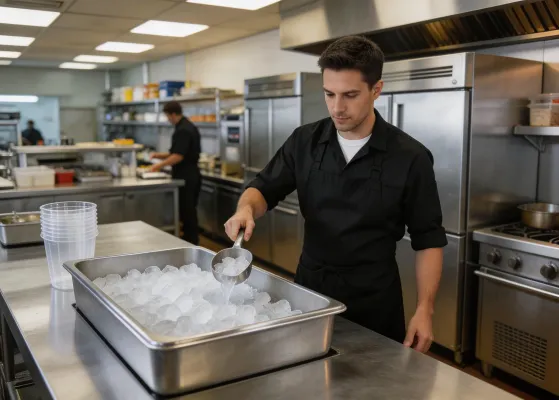
From fast-casual restaurants to five-star hotel banquet operations, reliable ice supply is critical to beverage service, food display, and guest satisfaction. IcePeak machines are NSF International certified and designed for high-throughput food service environments.

  • Cube, nugget, and flake ice types available
  • Capacities from 200 to 2,400 lbs/day
  • NSF/ANSI 12 certified for food safety
  • Antimicrobial components as standard
  • ENERGY STAR qualified models for utility rebates
Get Food Service Quote

Healthcare & Medical

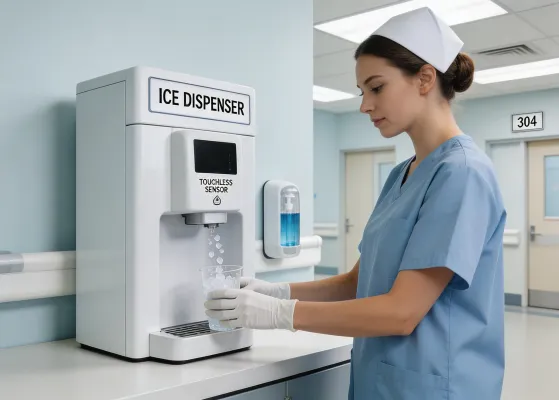
Hospitals, clinics, and long-term care facilities require sanitary ice for patient hydration, therapeutic use, and specimen preservation. Our healthcare ice systems meet stringent infection-control standards.

  • Touchless dispensing to reduce cross-contamination
  • HACCP-compatible design with sealed ice pathways
  • Nugget ice preferred for patient consumption
  • Quiet operation under 52 dB(A) for patient areas
  • Integrated water filtration removing 99.9% of particulates
Get Healthcare Quote

Fisheries & Seafood Processing

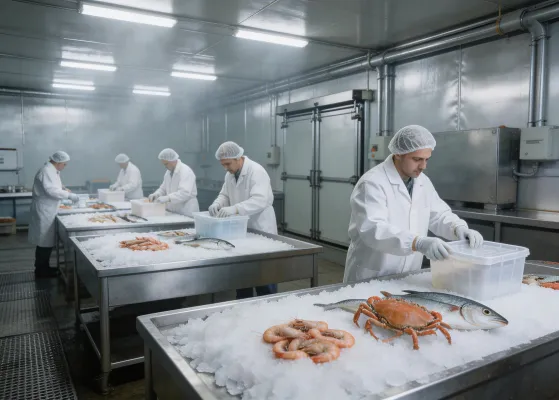
Rapid cooling with flake or tube ice is essential to preserve catch quality from dock to distribution. Our high-capacity ice plants are built for harsh marine environments and 24/7 production cycles.

  • Flake ice for maximum surface contact cooling
  • Capacities up to 60 tons/day per unit
  • Seawater-compatible evaporator options
  • Corrosion-resistant stainless steel 316L construction
  • Automatic ice storage and conveying systems
Get Fisheries Quote

Cold Chain Logistics

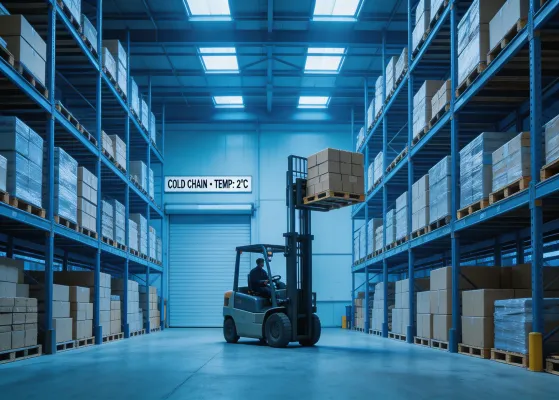
Temperature-controlled storage and transport demand reliable refrigeration systems with redundancy and real-time monitoring. IcePeak cold chain solutions maintain product integrity from warehouse to delivery.

  • Walk-in coolers from 6 to 5,000+ sq ft
  • Blast freezers reaching -40°C in under 4 hours
  • IoT temperature monitoring with alarm notification
  • Redundant refrigeration for zero-tolerance applications
  • HACCP and GDP compliance documentation
Get Cold Chain Quote

Retail & Convenience

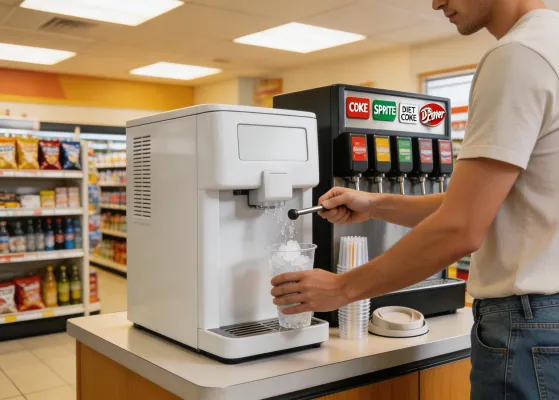
Space-efficient undercounter and countertop ice machines deliver consistent ice supply for beverage stations, self-serve areas, and prepared food counters in retail environments.

  • Compact undercounter models from 15" width
  • Self-contained air-cooled operation
  • Low water consumption models available
  • Easy front-access service panels
  • ADA-compliant dispenser options
Get Retail Quote

Industrial Processing

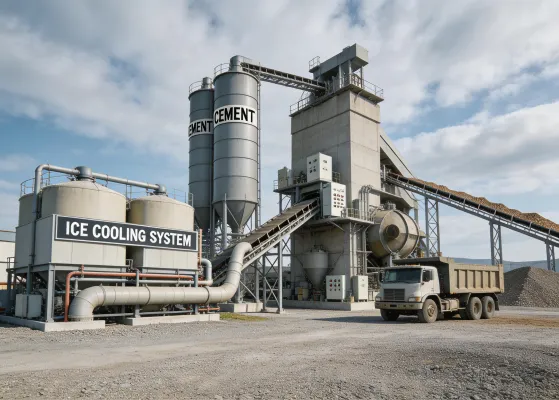
Process cooling applications in concrete production, chemical manufacturing, and pharmaceutical processing require precise ice delivery at industrial scale. Our systems handle extreme ambient temperatures and continuous operation demands.

  • Flake and tube ice for concrete cooling
  • High-ambient temperature rated to 50°C
  • Automated ice weighing and delivery systems
  • PLC-integrated control interfaces
  • ATEX-rated options for hazardous environments
Get Industrial Quote

Ice Machine Selection: Key Trade-Offs

Selecting the right ice system involves navigating genuine engineering trade-offs. We present both sides so you can make an informed decision based on your facility's priorities.

Air-Cooled vs. Water-Cooled Ice Machines

Air-Cooled

Lower installation cost with no cooling tower or water supply needed. Zero water consumption for heat rejection. Simpler permitting and maintenance. The preferred choice in water-scarce regions or where rooftop/outdoor space is limited.

Water-Cooled

Delivers 15-20% higher COP and quieter operation, making it the preferred option for noise-sensitive healthcare and hospitality environments. However, water-cooled units consume approximately 100 gallons per 100 lbs of ice produced and require ongoing water treatment. Facilities with high water costs or drought restrictions may find total cost of ownership unfavorable despite the energy advantage.

Natural Refrigerants vs. Synthetic Low-GWP HFOs

Natural Refrigerants (R-290, R-744)

Near-zero GWP (R-290: GWP 3, R-744: GWP 1), no patent dependencies, and lower long-term operating costs. R-290 delivers 5-10% better energy efficiency due to superior thermodynamic properties. Trade-off: R-290 is classified as A3 (flammable), limiting charge size to 150g in many jurisdictions and requiring specialized ventilation and leak detection in machine rooms.

Synthetic HFOs (R-1234yf, R-1234ze)

Drop-in compatibility with existing HFC infrastructure reduces retrofit cost and training requirements. No flammability concerns in standard configurations. Trade-off: higher refrigerant cost per kg, potential PFAS classification under evolving EU regulations, and patent-protected supply chains that may limit long-term pricing flexibility.

Inverter (Variable Speed) vs. Fixed Speed Compressors

Variable Speed / Inverter

Delivers 30-50% energy savings at part-load conditions through modulating capacity. Provides precise temperature control and soft-start capability that reduces mechanical stress. Essential for applications with fluctuating demand profiles such as hotel banquet operations or seasonal food service.

Fixed Speed

Lower capital cost by 15-25%, simpler control logic, and easier field maintenance. Proven reliability in constant-load applications such as industrial ice plants and high-volume fishery operations where machines run at full capacity continuously. Higher lifetime energy cost is offset by lower purchase price in applications with consistently high utilization rates above 80%.

Centralized vs. Distributed Ice Production

Centralized Ice Plant

Higher overall energy efficiency through larger, optimized compressor systems. Easier maintenance access and lower total refrigerant charge per ton of ice. Better integration with heat recovery systems. Trade-off: requires extensive ice distribution piping or conveying infrastructure, and a single-point failure can halt all ice supply.

Distributed Point-of-Use Units

Built-in redundancy where one unit failure affects only a single zone. Lower piping cost and phased capital expenditure. Shorter ice delivery distance preserves ice quality. Trade-off: higher cumulative energy consumption, more maintenance touchpoints, and greater total refrigerant volume across the facility.

Verify Before You Buy

We encourage all prospective customers to independently validate our performance claims through these verification channels.

Free Sample Testing

Request a demo unit for 14-day on-site evaluation. We ship to your facility with pre-configured settings matching your ambient and water conditions.

AHRI Certified Data

All modular and undercounter models are tested and certified by AHRI under Standard 810. Look up our certified ratings at ahridirectory.org.

Application Engineer Consultation

Schedule a free 30-minute call with our application engineers to review your load calculations, water quality reports, and site conditions before purchase.

Reference Site Visits

We can arrange visits to existing installations in your region and industry sector so you can observe equipment performance in comparable operating conditions.

6 Core Industries Served
57 Countries Worldwide
40K+ Installations Globally